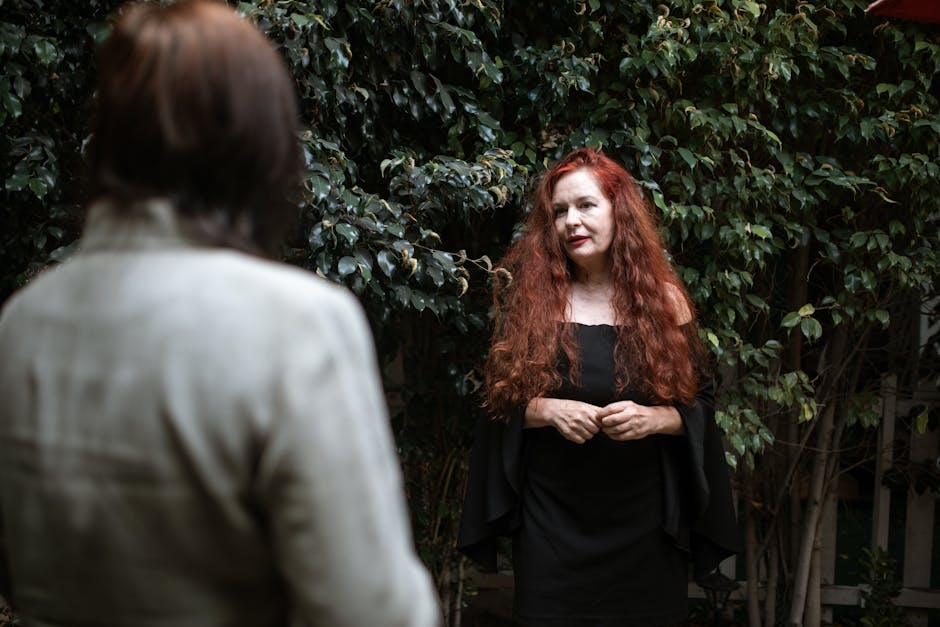

Beautiful

Beauty in a photograph isn’t magic. It’s a set of repeatable decisions about composition, light, and subject placement. This guide gives you the exact rules, camera settings, and editing steps used by working photographers to create images people call beautiful. No fluff. Just the mechanics.
1. The Three Non-Negotiable Elements of a Beautiful Photo
Every beautiful photograph contains three things: clear subject, intentional light, and clean composition. Miss one, and the image falls flat. Here’s how each works.
Clear Subject
The viewer’s eye must land somewhere specific within one second. That’s your subject. It can be a person, a building, a leaf, or a shadow. But it must be unmistakable. If someone asks “what am I looking at?” the photo fails. Crop out anything that competes for attention. Use a wide aperture (f/1.8 to f/2.8 on a 50mm lens) to blur the background and isolate the subject.
Intentional Light
Flat, overhead light kills beauty. The best light comes from the side or behind the subject, not from your camera flash. For portraits, position the subject so light hits one cheek and leaves the other in shadow. That’s called Rembrandt lighting. For landscapes, shoot during golden hour — the first hour after sunrise and the last hour before sunset. The sun sits low, casting long shadows and warm tones.
Clean Composition
Composition is the frame around the subject. The most reliable tool is the Rule of Thirds. Divide your frame into a 3×3 grid. Place your subject on one of the four intersection points, not in the center. Most phone cameras have a grid overlay option — turn it on. The Canon EOS R5 ($3,899 body only) and the Sony A7 IV ($2,498 body only) both include grid overlays in their viewfinders.
Verdict: If your photo lacks one of these three elements, it won’t look beautiful. Fix the missing piece before you shoot.
2. The Rule of Thirds vs. Symmetry: When to Break the Rules
The Rule of Thirds works 80% of the time. Symmetry works for the other 20%. Knowing which to use separates beginners from pros.
When to Use the Rule of Thirds
Use it for portraits, landscapes with a distinct horizon, and action shots. Place the horizon on the upper or lower third line — never in the middle. Place the subject’s eyes on the upper third line. This creates tension and movement. The Nikon Z8 ($3,999 body only) has a built-in level that helps you align horizons precisely.
When to Use Symmetry
Use symmetry for architecture, reflections, and formal portraits. A perfectly centered bridge, a mirror-still lake, or a straight-on headshot all benefit from symmetry. The iPhone 15 Pro Max ($1,199) has a Level tool in the camera app that shows a crosshair — align it for dead-center shots. Symmetry signals stability and calm. The viewer’s brain processes it instantly as ordered and beautiful.
The Mistake Most People Make
They force symmetry onto dynamic subjects. A running dog centered in the frame looks static, not beautiful. Let action subjects break the center. Rule of thumb: if the subject is moving, leave space in front of them (called “lead room”). If the subject is still, centering can work.
3. Lighting Setups That Work Every Time
Bad light ruins good composition. Here are three lighting setups that produce beautiful results with minimal equipment.
Window Light (Free, Available Anywhere)
Position your subject next to a window, not facing it. The window should be at a 45-degree angle to the subject. This creates a soft gradient from light to shadow across the face. North-facing windows give the most even light. South-facing windows give stronger contrast. Shoot with the window as the only light source. Set your camera to ISO 400, aperture f/2.8, shutter speed 1/125th. The result looks like a professional studio portrait.
Golden Hour (Time-Constrained, High Reward)
Shoot 30 minutes after sunrise or 30 minutes before sunset. The sun is low, creating long shadows and warm color temperatures (around 3500K). Set white balance to “Cloudy” on your camera — it warms the image further. For landscapes, stop down to f/8 or f/11 to keep the entire scene sharp. Use a tripod if your shutter speed drops below 1/60th. The Manfrotto Compact Action tripod ($69.99) is lightweight and reliable.
Reflector Fill (Under $20, Transforms Portraits)
A 5-in-1 reflector (Neewer brand, $19.99 on Amazon) bounces light back into shadow areas. Use the silver side for bright, punchy fill. Use the white side for soft, natural fill. Position the reflector opposite the main light source, just below the subject’s face. This fills in under-eye shadows and adds a catchlight to the eyes. Without a catchlight, eyes look dead. With one, they look alive and beautiful.
Verdict: Window light is the easiest path to beautiful portraits. Golden hour is the easiest path to beautiful landscapes. Reflectors fix harsh shadows instantly.
4. The Five Most Common Composition Mistakes (And How to Fix Them)
These mistakes appear in 90% of beginner photos. Fix them and your images instantly become more beautiful.
- Crooked horizon. The horizon should be perfectly horizontal. A 2-degree tilt makes the viewer subconsciously uncomfortable. Fix: turn on the grid overlay on your phone or camera. The Adobe Lightroom app (free on iOS and Android) has a crop tool with an auto-straighten button.
- Headroom too large. Leaving too much empty space above the subject’s head makes the subject feel small and disconnected. Fix: position the subject’s eyes on the upper third line. Crop the top of the frame close to the top of the head.
- Distracting background. A pole growing out of someone’s head, a bright sign behind them, or a busy pattern pulls attention away. Fix: move the subject or change your angle. Walk two steps left or right. Crouch down. A lower angle often puts the subject against the sky, which is clean and neutral.
- No foreground interest. Landscapes without something in the foreground look flat. A rock, a flower, or a person in the bottom third adds depth. Fix: include an object within 3 feet of the lens. Set your focus on the foreground object and let the background blur.
- Over-editing. Too much saturation, contrast, or sharpening makes photos look artificial. The human eye detects unnatural colors immediately. Fix: in Snapseed (free on iOS and Android), never push saturation above +20. In Lightroom, keep clarity under +15. Less is more.
5. Editing Workflow: Five Steps to a Finished Photo
Editing should enhance what the camera captured, not rescue a bad shot. This five-step workflow works for any photo taken in decent light.
| Step | Action | Tool | Setting |
|---|---|---|---|
| 1 | Crop and straighten | Lightroom, Snapseed | Rule of Thirds grid, auto-straighten |
| 2 | Adjust exposure | Lightroom, Snapseed | +0.3 to +0.7 EV for portraits, -0.3 for landscapes |
| 3 | Set white balance | Lightroom, Snapseed | Use eyedropper on a neutral white or gray area |
| 4 | Add contrast | Lightroom | +10 to +20, or use the Tone Curve (S-curve) |
| 5 | Sharpen | Lightroom, Snapseed | Amount: 30-50, Radius: 1.0, Masking: 70 (hold Alt key to see mask) |
Do not skip step 3. Wrong white balance makes skin look green or orange. The eyedropper tool in Lightroom costs nothing and fixes color in one click. Pro tip: always edit on a calibrated monitor. The Dell U2723QE ($619) covers 98% DCI-P3 color space. Editing on a phone screen is fine for social media, but colors shift on other screens.
6. When NOT to Follow These Rules (And What to Do Instead)
Rules exist to be broken, but only when you understand why they exist. Here are three situations where you should ignore the standard advice.
When Shooting in Harsh Midday Sun
The rules say shoot during golden hour. But if you’re at a family reunion at noon, you can’t wait. Fix: find open shade — the shadow side of a building or a tree. Position your subject in the shade with their face toward the light source (the sky, not the sun). Set white balance to “Shade” (around 7000K) to warm up the blue tones. The Google Pixel 8 ($699) handles shade well with its Real Tone processing.
When the Subject Is a Pattern or Texture
The rules say to isolate the subject. But sometimes the subject IS the repetition. A brick wall, a row of chairs, or a field of flowers looks best when you fill the entire frame with the pattern. Fix: zoom in tight. Eliminate any single element that stands out. The pattern itself becomes the subject. This works especially well for abstract photography.
When the Background Tells a Story
The rules say to blur the background. But if the background provides context — a chef in a kitchen, a musician on stage — you want it sharp. Fix: stop down to f/5.6 or f/8. Keep both the subject and the background in focus. The Sony 24-70mm f/2.8 GM II ($2,298) is versatile enough for both blurred and sharp backgrounds depending on the aperture you choose.
7. The One Thing That Separates Beautiful Photos From Average Ones
After years of looking at photos, one pattern emerges. Beautiful photos have intentional tension. Something is slightly off — a shadow that cuts across a face, a subject looking away from the camera, an unexpected color pop in a muted scene. The tension makes the viewer pause. It rewards closer looking.
Average photos are perfectly pleasant and instantly forgettable. They follow every rule. They have good light and clean composition. But they lack friction. The viewer glances, nods, and scrolls.
To create tension, break one rule deliberately. Shoot a portrait where the subject’s face is 70% in shadow. Frame a landscape with a tree trunk taking up the left third. Use a color grade that leans slightly teal in the shadows and orange in the highlights — the teal-orange look popularized by movies like Mad Max: Fury Road. Do it on purpose. Know why you’re doing it.
The future of beautiful photography isn’t more gear. It’s more intention. The best camera you own is the one you understand well enough to break the rules with confidence.