
Best Planners for Men 2024: Top Professional and Personal Organizers Reviewed

A study conducted by Dr. Gail Matthews at the Dominican University of California revealed that individuals who write down their goals are 42% more likely to achieve them than those who simply keep them as internal thoughts. This statistic isn’t merely a motivational trope; it represents a fundamental cognitive shift in how the brain processes commitment. While the digital landscape is saturated with task management apps and AI-driven calendars, the analog planner has seen a significant resurgence among male professionals seeking to reclaim their focus from the tyranny of notifications. The market for these tools has evolved far beyond the generic desk calendars of the past, branching into specialized systems designed for executive decision-making, creative project management, and holistic habit tracking.
Choosing a planner as a man often involves navigating a marketplace that frequently leans toward aesthetic flourishes that may not align with a professional or utilitarian sensibility. The search for the best planners for men typically centers on three pillars: structural durability, paper performance, and a layout that facilitates deep work rather than just list-making. This analysis explores the leading options for 2024, examining the technical specifications and the underlying productivity philosophies that make them effective for different professional archetypes.
Why Analog Planning Outperforms Digital Apps for Male Professionals
The transition from a high-powered digital ecosystem back to paper might seem counterintuitive. However, the efficacy of physical planners lies in the neurological phenomenon known as the “generation effect.” When you physically write a task, your brain engages in a more complex encoding process than it does when you tap a screen. This leads to better memory retention and a higher level of psychological ownership over the task. For men managing complex projects or leading teams, the act of writing serves as a filter. It forces a momentary pause—a deliberate choice about what actually deserves space on the page. Digital lists tend to grow infinitely; paper has boundaries.
The Cognitive Load of Digital Notifications
Digital planners live on devices designed to distract. Every time you open a phone to check a schedule, you are three millimeters away from a distracting email, a news alert, or a social media notification. This constant context switching creates a state of “continuous partial attention,” which erodes the ability to perform deep work. A physical planner provides a dedicated environment for focus. It is a single-purpose tool. When the book is open, the objective is clear. This reduction in cognitive load allows for a more thorough analysis of the day’s priorities without the background noise of the digital world. Furthermore, the absence of blue light during evening planning sessions can help regulate circadian rhythms, making the analog planner a superior choice for those who do their deep thinking before bed or first thing in the morning.
Tactile Feedback and the Zeigarnik Effect
The Zeigarnik Effect suggests that our brains are hardwired to remember uncompleted tasks more vividly than completed ones, leading to a state of mental tension. Physically crossing out a task in a planner provides a tactile closure that clicking a checkbox cannot replicate. This sensory feedback signals to the brain that the loop is closed, reducing the background anxiety associated with a heavy workload. For men who struggle with “switching off” after work, the physical act of closing a planner at the end of the day can serve as a powerful psychological ritual, marking the definitive boundary between professional obligations and personal time. This ritualistic closing of the book helps in transitioning the mind into a restorative state, essential for long-term burnout prevention.
Strategic Deep Work vs. Tactical Task Management
Most digital apps are excellent at tactical task management—reminding you to buy milk or attend a 2:00 PM meeting. They are often poor at strategic planning. A well-designed paper planner encourages a top-down approach. It asks you to define quarterly goals before you write down Monday’s to-do list. This hierarchy ensures that daily actions are aligned with long-term objectives. By viewing a weekly spread, you can visually identify imbalances in your schedule, such as back-to-back meetings that leave no room for the deep work required for high-level problem solving. Paper allows for a spatial awareness of time that a scrolling digital list simply cannot provide, making it easier to spot “time leaks” in a busy executive’s schedule.
The physical constraints of a paper page are its greatest feature, not its limitation. It forces the user to prioritize ruthlessly, ensuring that only the most impactful tasks survive the cut.
Comparing the Best Daily and Weekly Planners for Men
Selecting the right tool requires an honest assessment of your daily workflow. Do you manage a high volume of granular tasks, or do you focus on three major projects per week? The following planners represent the gold standard in their respective categories, analyzed for their build quality and systematic approach to productivity.
The Full Focus Planner by Michael Hyatt
The Full Focus Planner is arguably the most structured system on the market. It is built on the “Big 3” philosophy, which posits that you should identify three critical tasks each day that will move the needle on your long-term goals. This planner is a quarterly tool, meaning you use four books per year. This keeps the physical weight down while allowing for immense detail within each day. It features a high-quality linen or leather-bound cover and thick, cream-colored paper that minimizes distractions.
- Approximate Price: $45.00 – $50.00
- Specifications: 5.8″ x 8.3″ (A5), 100-120 GSM paper, Smyth-sewn binding.
- Pros: Exceptional goal-setting framework; includes dedicated sections for weekend resets and quarterly reviews; lay-flat binding prevents fighting the spine.
- Cons: Requires a significant time commitment to learn the system; the quarterly format means higher annual costs compared to annual planners.
The Hobonichi Techo Cousin (A5)
For the man who appreciates Japanese engineering and minimalist design, the Hobonichi Techo Cousin is a masterpiece of utility. It uses Tomoe River paper, which is incredibly thin yet remarkably resistant to ink bleed-through, allowing for a 400-page book that remains portable. The “Cousin” version features a weekly vertical layout that is ideal for time-blocking, alongside a full page for each day. This dual-layout system is perfect for men who need to track both appointments and detailed meeting notes simultaneously.
- Approximate Price: $55.00 – $65.00
- Specifications: A5 size, 52 GSM Tomoe River Paper, 4.0mm grid layout.
- Pros: Best-in-class paper quality; highly versatile grid layout; accommodates both scheduling and long-form journaling.
- Cons: The thin paper has some “ghosting” (seeing text through the page); the Japanese-centric calendar may include holidays not relevant to Western users.
The Panda Planner Pro
The Panda Planner Pro is designed for those who want to integrate positive psychology into their workflow. It divides the page into sections for gratitude, focus, and exercise alongside standard task lists. It is undated, which is a significant advantage for those who may not need to use a planner every single day and want to avoid wasting pages. This is particularly useful for freelancers or consultants whose workloads ebb and flow.
- Approximate Price: $30.00 – $35.00
- Specifications: 8.5″ x 11″, 100 GSM paper, Hardcover.
- Pros: Focuses on mental well-being and habit tracking; undated format provides flexibility; durable hardback cover.
- Cons: The layout can feel cluttered for those who prefer minimalism; the paper quality is standard and may not handle heavy fountain pen ink well.
Comparison Summary of Top Models
| Planner Model | Layout Type | Paper Weight | Best For |
|---|---|---|---|
| Full Focus | Daily (Quarterly) | 100-120 GSM | Executive Goal Alignment |
| Hobonichi Cousin | Daily + Weekly | 52 GSM (Tomoe River) | Minimalist Portability |
| Panda Planner Pro | Daily/Weekly/Monthly | 100 GSM | Habit & Mood Tracking |
| Moleskine PRO | Weekly Vertical | 70 GSM | Basic Professional Scheduling |
| Baronfig Confidant | Dot Grid (Custom) | 100 GSM | Creative Free-form Planning |
The Baronfig Confidant (Work/Play Edition)
Baronfig has carved out a niche for creative professionals who find rigid structures stifling. Their planners often feature a mix of structured scheduling and open dot-grid space. The paper is specifically engineered to have a slight tooth, providing a satisfying tactile experience for those who use pencils or fine-liner pens. It is a tool for the man who needs to sketch a wireframe in the morning and schedule a client call in the afternoon. The Confidant uses high-quality 100 GSM acid-free fine grain paper, which is heavy enough to prevent most fountain pen inks from bleeding through. Its unique dimensions strike a balance between the standard A5 and a smaller pocket notebook, making it a favorite for those who value “Everyday Carry” (EDC) efficiency.
- Approximate Price: $28.00 – $32.00
- Specifications: 5.4″ x 7.7″, 100 GSM acid-free paper, 160 pages.
- Pros: Clean, unobtrusive aesthetic; excellent for hybrid sketching/writing; opens perfectly flat due to high-end binding.
- Cons: Lack of guided prompts might leave some users feeling lost; no built-in pocket for loose papers.
How to Choose a Planner Based on Professional Workflow
Selecting the best planner isn’t just about the brand; it’s about matching the tool to the specific demands of your career. A trial lawyer’s scheduling needs are vastly different from those of a software engineer or a freelance consultant. To make an informed decision, you must evaluate the technical aspects of the planner against your daily habits. If you carry a slim briefcase, a bulky A4 desk planner will eventually be left at home, rendering it useless. If you use a fountain pen, cheap 70 GSM paper will turn your notes into an illegible mess of ink feathers.
Assessing Your Scheduling Granularity
The first question to ask is whether you need a daily or weekly view. Daily planners provide ample space for detailed notes, meeting minutes, and long to-do lists. They are ideal for men in roles with high operational complexity where every hour is packed. Weekly planners, conversely, provide a bird’s-eye view of the landscape. They are superior for project-based work where the goal is to manage deadlines across a seven-day span. If you find yourself frequently rewriting tasks from one day to the next, a weekly layout might be more efficient as it allows for a more fluid movement of priorities. Furthermore, consider if you need a vertical or horizontal layout; vertical layouts are generally better for time-blocking, while horizontal layouts favor list-makers.
Paper Quality and Pen Compatibility
In the world of stationery, GSM (Grams per Square Meter) is the standard measurement of paper thickness. Most standard notebooks use 70-80 GSM paper, which is fine for ballpoint pens but will bleed if you use a rollerball or fountain pen. For a premium experience, look for 100 GSM or higher. However, thickness isn’t the only factor; the “coating” of the paper matters. Some papers are highly absorbent, while others allow the ink to sit on top (coated), resulting in more vibrant colors but longer drying times. If you are left-handed, a fast-drying, uncoated paper is a non-negotiable requirement to avoid smudging your schedule. Also, consider the paper color; bright white can be harsh under office fluorescent lights, whereas cream or ivory is often easier on the eyes during long sessions.
The Importance of Binding and Portability
A planner that doesn’t lay flat is a constant source of friction. You should not have to fight the spine of the book while trying to write a quick note. Look for “Smyth-sewn” binding, which allows the book to open 180 degrees without the pages falling out over time. Regarding size, the A5 (approximately 5.8 x 8.3 inches) is the industry standard for a reason: it offers enough surface area for meaningful writing while fitting easily into most bags. If your work is primarily desk-bound, a larger B5 or Letter-sized planner can provide a sense of “command center” authority, but be wary of the weight if you commute frequently. A heavy planner is a planner that stays on the shelf, and a planner on the shelf is a system that fails.
Avoidable Pitfalls: Why Most Men Abandon Their Planners
One of the primary reasons men abandon their planners within the first month is the “Perfectionism Trap.” There is an intimidating quality to a pristine, expensive leather-bound book. Users often feel that their handwriting must be perfect or that every page must be a work of art. To combat this, treat the planner as a tool, not a relic. It is okay to cross things out, use shorthand, or have messy edges. The value is in the thinking, not the calligraphy.
Another common mistake is over-scheduling. A planner is a tool for prioritization, not a list of everything you could possibly do in a 24-hour period. If you fill every line, you leave no room for the inevitable “fires” that need to be extinguished in any professional environment. Successful planning requires “white space”—buffer time that allows for transition and unexpected opportunities. Finally, many fail because they don’t carry the planner with them. If it isn’t accessible when a new task arises, you will revert to digital notes, fragmenting your system and making it unreliable.
Essential Accessories for the Analog Power User
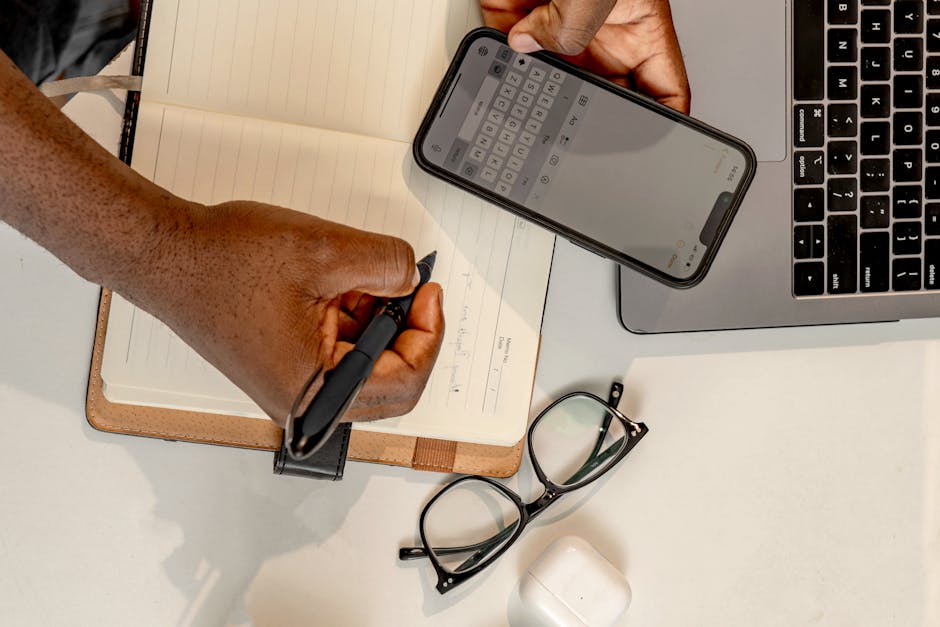
To maximize the utility of a high-end planner, the choice of writing instrument is paramount. A standard ballpoint often requires too much pressure, leading to hand fatigue during long planning sessions. Many professionals prefer a 0.5mm gel pen for precision or a fountain pen for the ultimate tactile experience. Additionally, using adhesive tabs or brass page markers can help you jump between the monthly overview and the current day without fumbling through pages.
For those who travel or work in varying environments, a dedicated leather cover is a wise investment. It not only protects the paper from spills and edge-wear but also provides slots for business cards and a dedicated pen loop. This ensures that your system is always self-contained and ready for use, whether you are in a boardroom, a terminal, or a coffee shop. High-quality accessories turn a simple notebook into a professional workstation that commands respect and signals a high level of organizational intent.
The Friday Review: A Critical Success Factor
No planner, regardless of its price or design, will work if it isn’t integrated into a consistent routine. The most successful users of analog systems employ a “Friday Review.” This involves taking 20 minutes at the end of the work week to look back at what was accomplished, migrate unfinished tasks to the following week, and clear the mental deck for the weekend. The best planners for men include dedicated space for this reflection. By externalizing your stress onto the page on Friday afternoon, you ensure that you don’t spend your Sunday evening ruminating on Monday’s obligations. This ritual is what transforms a simple notebook into a high-performance management system that preserves your mental health as much as your productivity.